
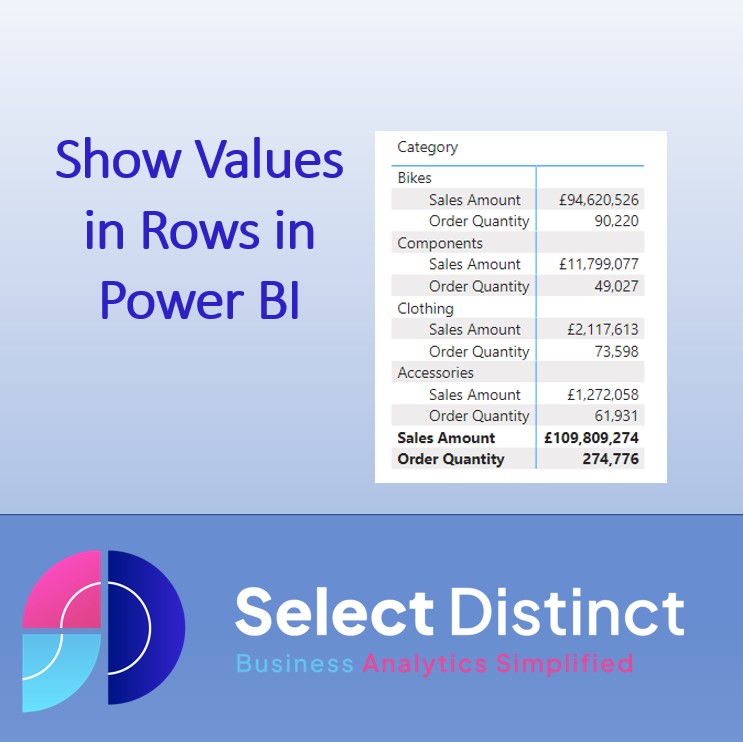
By default, Power BI displays multiple measure values side-by-side in columns. However, for financial summaries, P&Ls, and executive reports, you often need values stacked vertically as individual rows.
If you are transitioning from Excel Pivot Tables, finding where Power BI hides this formatting setting isn’t immediately obvious, but it only takes a single toggle to switch, as shown in this example:
If you are familiar with How to create Pivot Tables in Excel ,you know Excel handles row metrics automatically. In Power BI, you just need to turn on a single formatting setting:
Step 1: Start with a Standard Matrix Visual
To begin, set up a standard Matrix visual on your Power BI report canvas:
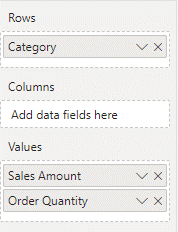
Rows field: Add
CategoryValues field: Add
Sales AmountandOrder Quantity
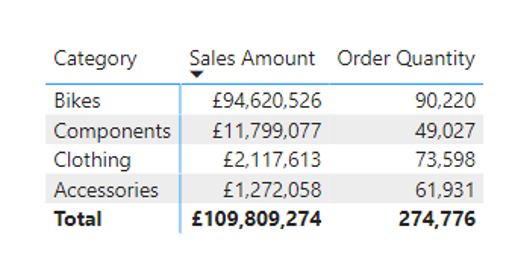
By default, Power BI places these two measures side-by-side as separate columns:
Step 2: Navigate to Format Settings
To switch these column values into rows:
- Click on the Matrix visual to select it.
- Go to the Visualisations pane on the right-hand side.
- Select the Format your visual tab (the paintbrush icon).
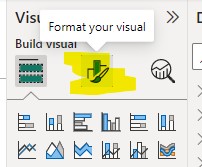
4. Locate the Values section and click the chevron (>) to expand the options
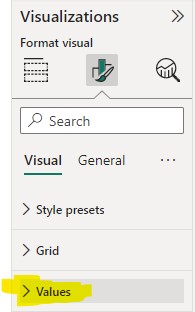
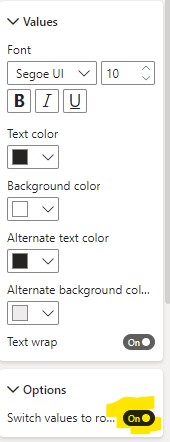
5. Scroll down to the bottom of the Values settings (under Options) and toggle “Show on rows” to On.
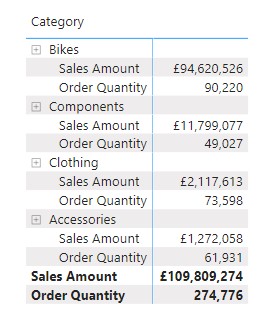
Final Result: Matrix Values Displayed on Rows
Once enabled, your Matrix visual will immediately update to show each measure stacked vertically as its own row under the corresponding category:
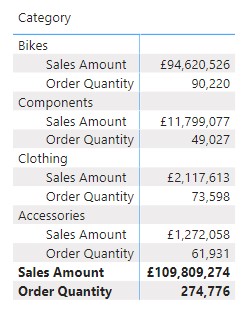
Each additional metric you place in the Values field well will now automatically appear as a new row beneath each category item.
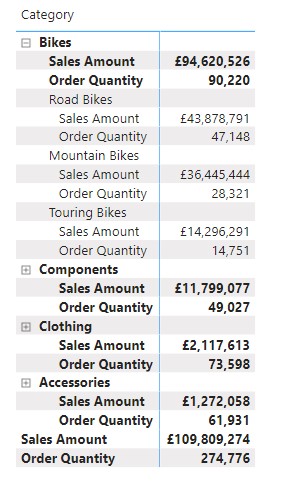
Adding Hierarchy Levels (Expand/Collapse)
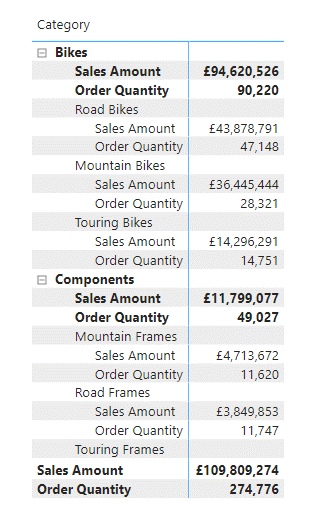
If you add additional levels to your row hierarchy (such as Sub Category under Category), Power BI adds a + icon next to each parent category.
This lets report consumers expand or collapse levels while keeping the stacked measure layout intact:
Adjust Indentation for Stepped Layouts
By default, the stepped layout indentation in Power BI Matrix visuals can be subtle and difficult for users to distinguish.
To make your hierarchy clearer and easier to read, you can increase the row header indentation:
Open the Format visual pane (paintbrush icon) with the Matrix selected.
Expand Row headers and scroll down to expand Options.
Find the Stepped layout indentation setting.
Increase the indent value (setting it to at least 20 pt) to make the hierarchy levels distinct and easy to scan.
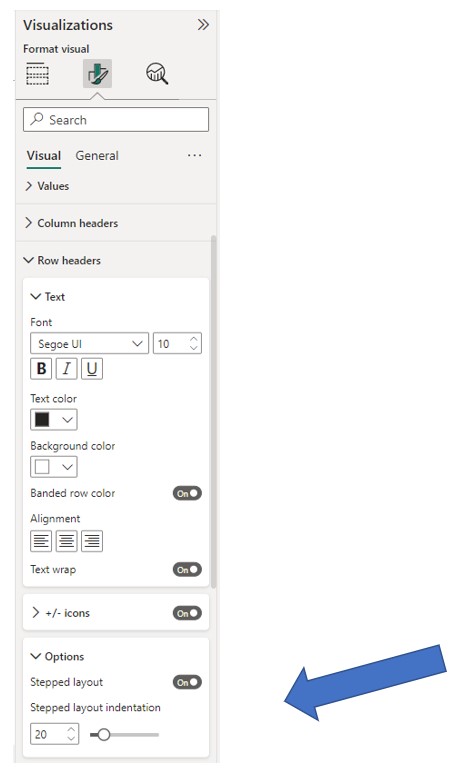
After increasing this value to at least 20 the matrix is much clearer to read
Displaying measure values on rows in a Power BI Matrix visual is one of the quickest ways to create clear financial reports, P&L statements, and executive dashboards.
By toggling Show on rows and adjusting your stepped layout indentation, you can easily replicate familiar Excel Pivot Table layouts directly in Power BI.
