
Why Google ditched the “Looker” prefix and what it means for your data strategy in 2026.
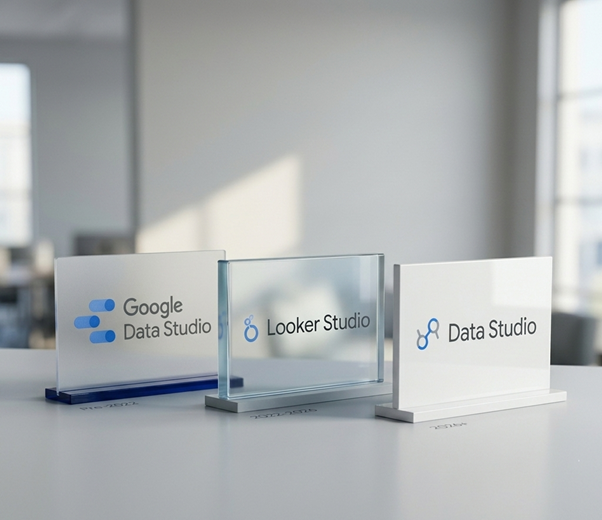
In the world of technology branding, corporate identity is often a journey of evolution. In April 2026, Google completed a major chapter of that journey by officially bringing back a name that resonates deeply with the data community: Google Data Studio.
It is a classic “full circle” moment. In October 2022, the decision to rename the tool to Looker Studio was met with a mix of curiosity and confusion. Fast forward to today, and that decision has been reversed. This shift ripples across the entire ecosystem: Looker Studio Pro has transitioned into Data Studio Pro, and the interface is shedding its “Looker-lite” identity to embrace its roots as an accessible reporting tool.
The Strategy Behind the Name

The timing of this change isn’t accidental. The primary driver was persistent market confusion. Since 2022, Google’s teams and consultants have faced an uphill battle explaining the difference between a user-friendly reporting tool and the high-end, developer-centric Looker enterprise platform.
By refining the product’s position, Google is responding to the practical needs of modern data teams. According to the Official Google Cloud Update, this shift finally draws a clear line between their “fast and flexible” reporting tool and their “heavy-duty, governed” BI platform.
A New Mission: More Than Just Dashboards
While the name is old, the mission is entirely new. Google is no longer positioning Data Studio as just a “dashboarding tool.” In the 2026 ecosystem, Data Studio has been elevated to the status of a “Content Browser” for the Google Data Cloud. This is a fundamental shift in how we interact with information.
Instead of being a destination where you simply view charts, the new Data Studio serves as a central hub to access a variety of data assets:
- Traditional Reports and Dashboards: The drag-and-drop visualizations we’ve used for a decade.
- BigQuery Conversational Agents: AI-driven “chatbots” that allow stakeholders to query massive datasets using natural language without ever looking at a SQL query.
- Colab Apps: Interactive, high-performance data applications built in Python, now hosted and accessible directly within the Data Studio interface.
This repositioning moves the tool away from the perception of “visualising spreadsheets” and toward a professional environment for “exploring cloud data warehouses.”
A Tailored Choice: Data Studio vs Data Studio Pro
Google is now offering the platform in two distinct tiers, ensuring the tool scales alongside your business requirements.
Data Studio: Remains as a powerful, accessible, no-cost version. It’s built for individual analysts who need to turn raw data into a visual story (dashboard) without any overhead costs.
Data Studio Pro: For organisations that have outgrown basic reporting, the Pro tier introduces a layer of sophisticated oversight. It focuses on team-wide collaboration, offering advanced AI tools and enterprise-level security protocols that align with Google Cloud’s compliance standards
Data Studio vs Looker: Which one do you need?
A common question following the update is whether the original Looker platform is being phased out. The answer is a resounding no. In fact, this rebrand makes the distinction between the two tools clearer and more valuable than ever.
To ensure you’re using the right tool for the job, here is a quick breakdown of how the two platforms now sit alongside each other:
| Feature | Google Data Studio | Looker (Enterprise) |
| User Persona | Marketers, business leads, and analysts | Data engineers, developers, and large-scale corporations |
| Primary Use | Quick, ad-hoc reporting and visualising performance | Creating a single “source of truth” with governed data |
| Data Modelling | Flexible visual joins and calculated fields | Robust, code-based LookML (semantic layer) |
| Speed to Value | Minutes to hours. You can go from a spreadsheet to a dashboard relatively quickly. | Days to weeks. The focus is on accuracy and scale rather than instant setup. |
The Path Forward: Clarity as a Strategy
The return of Google Data Studio is more than just a win for brand recognition; it is a win for common sense. By acknowledging the distinct roles of self-service reporting and enterprise-grade governance, Google has removed the “identity friction” that has slowed down data teams since 2022.
For businesses, the message is clear: you no longer have to choose between speed and governance. You can use Data Studio for the rapid, AI-driven exploration your marketing and sales teams need, while keeping Looker as the unbreakable “source of truth” for your core metrics.
Our Take: At Select Distinct, we’ve always maintained that the most valuable data tool is the one your team uses. This move by Google clears the fog, allowing you to build a data culture that balances agility with security. With the “Studio” name officially back in the building, the focus shifts away from branding and back to what matters most: building insights that drive results.
Trying to make sense of the move back to Data Studio? Whether you’re looking to scale with the new Pro tier or you need to build a high-level “Source of Truth” in Looker, Select Distinct is here to help you skip the confusion and get the right tools in place for your business.
Talk to Select Distinct about out Google Data Studio Consulting