
Data Analytics Strategy & Consulting Services
Define the right KPIs, reporting frameworks and analytics roadmap to drive better business decisions.
Common Data Analytics Challenges We Solve
Unclear KPI Frameworks
Different teams measure success in different ways, resulting in inconsistent reporting and conflicting insights.
Disconnected Data Sources
Customer, financial, operational and marketing data spread across multiple systems.
Lack of a Data Strategy
Data is available, but there is no clear roadmap for how analytics should support business objectives and decision-making.
Limited Visibility Into Performance
Leadership teams struggle to access timely, reliable insights needed to identify opportunities and risks.
Inconsistent Reporting
Reports produced by different departments show different results, reducing confidence in the numbers.
Poor Data Quality & Governance
Duplicate, incomplete or inaccurate data leads to unreliable reporting and poor business decisions.
What Does a Data Analytics Consultant Do?
Many organisations collect large volumes of data but struggle to turn it into meaningful business decisions.
A data analytics consultant bridges that gap by helping businesses understand what data matters, how it should be measured and how insights can be used to improve performance.
Our Consultants Help Organisations:
- Define meaningful KPIs and success measures
- Develop data and analytics strategies
- Improve reporting accuracy and consistency
- Identify opportunities for operational improvement
- Create reporting and dashboard frameworks
- Establish data governance best practices
- Align analytics initiatives with business goals
Our Data Analytics Consultancy Approach
Our proven five-stage consulting framework helps organisations develop a clear analytics strategy, align reporting with business objectives, and unlock greater value from their data.
Step 1 - Discovery & Business Objectives
We begin by understanding your business goals, reporting challenges and decision-making requirements. This helps us identify where better use of data can improve performance, efficiency and visibility across the organisation.
We review your current reporting processes, key stakeholders and strategic objectives to establish a strong foundation for your analytics strategy.
Step 2 - Data & KPI Assessment
We assess your existing data sources, reporting capabilities and KPI framework to identify gaps, inconsistencies and opportunities for improvement.
Step 3 - Analytics Strategy Development
Using our findings, we develop a tailored data analytics roadmap that aligns with your business objectives and outlines the people, processes and technologies needed for success.
Step 4 - Solution Design & Implementation Planning
We define the reporting framework, data architecture and analytics requirements needed to support your strategy, enabling informed implementation decisions.
Step 5 - Continuous Improvement & Adoption
We help ensure analytics initiatives deliver measurable value through ongoing optimisation, governance recommendations and stakeholder adoption.

Benefits of Data Analytics for Businesses
Enhanced Decision-Making
Data analytics provides company owners with deeper insights into financial data, enabling more informed decision-making. By analysing trends, patterns, and anomalies in data, it can offer strategic advice to businesses, helping to optimise operations, reduce costs, and improve profitability.
Improved Financial Reporting
Data analytics tools can automate the collection, processing, and presentation of data, leading to faster and more accurate reporting. This automation reduces the time and effort required for manual data entry and analysis, minimizing errors.
Fraud Detection and Risk Management
Advanced analytics and machine learning algorithms can identify unusual data activity. Early detection of risk enables organizations to take preventative measures, safeguarding assets and financial integrity.
Strategic Planning
Data analytics enables businesses to perform predictive analysis, forecasting future trends and outcomes based on historical data. This insight supports strategic financial planning, budgeting, and forecasting, helping businesses to allocate resources more effectively and pursue growth opportunities.
Operational Efficiency
By streamlining and automating routine tasks, data analytics frees up business owners to focus on more strategic activities. This not only increases productivity but also allows firms to offer higher-value services, such as forecasting, strategic planning, and advisory services.
Why Invest in Data Analytics Consulting?
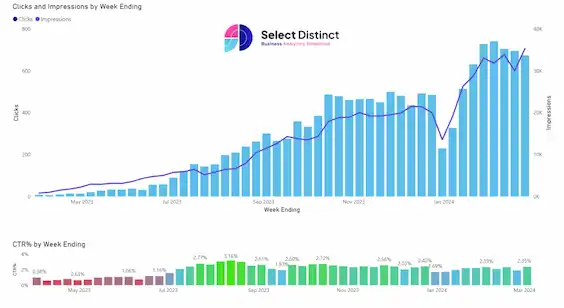
- To make informed decisions from customer behaviour
- To forecast properly and keep track of trends
- To improve both performance and productivity
Industries We Support Through Data Analytics Consulting
Why choose Select Distinct for Data Analytics Consulting?
Registered Management Accounting Practice
Data-Driven Strategies Aligned to Business Goals
KPI Frameworks That Drive Better Decisions
Practical Guidance With Measurable Results
Examples of Our Work





Data Analytics Blog Posts
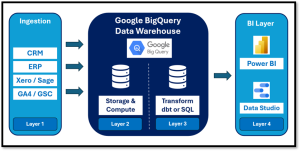
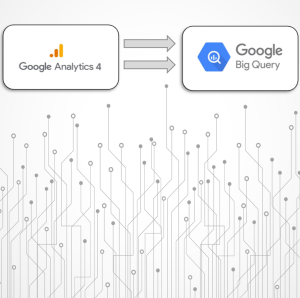
GA4 & BigQuery: The Analytics Stack for Full Customer Visibility
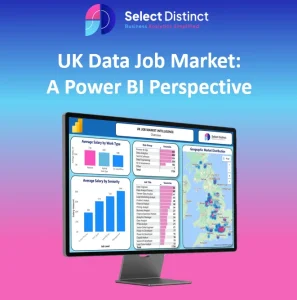

Other Data Analytics Resources
You can read all of our Data Analytics blog archives here


Frequently Asked Questions
What does a data analytics consultant actually do for my business?
A data analytics consultant bridges the gap between raw, disconnected data and actionable business decisions.
We audit your current data collection, design scalable reporting architectures, build models that answer your specific business questions, and mentor your team so you have a sustainable way to generate insights long after we finish our project.
How do I know if my business needs data analytics consulting?
You likely need professional support if your team is spending more time manually preparing spreadsheets than analysing data, if you lack a "single source of truth," or if your current reports do not provide the visibility you need to make fast, strategic decisions.
If your data is siloed or your reporting is inconsistent, a consultant can help you modernise your platform.
What is the typical process for a data analytics project?
Our process typically follows five steps: first, we conduct an initial meeting to understand your business goals; second, we create a top-level plan to map your data sources; third, we develop and build your data models; fourth, we provide training to ensure your team can manage the new system; and fifth, we offer ongoing support to help your platform evolve.
How can data analytics consulting improve my company's profitability?
Analytics consulting directly impacts the bottom line by automating manual reporting tasks—often cutting them by 80% or more and by providing real-time visibility into key performance metrics like sales, returns, and inventory.
This allows you to identify inefficiencies, reduce waste, and shift from reactive decision-making to proactive, data-driven forecasting.
Can you help us if our data is currently a mess?
Yes. We specialise in transforming fragmented or "messy" data into a clean, unified structure.
Whether your data is locked in legacy on-premise systems, disconnected SaaS tools, or scattered across dozens of spreadsheets, we design and implement the integration pipelines required to centralise and standardise it for reliable analysis.